
In brief:
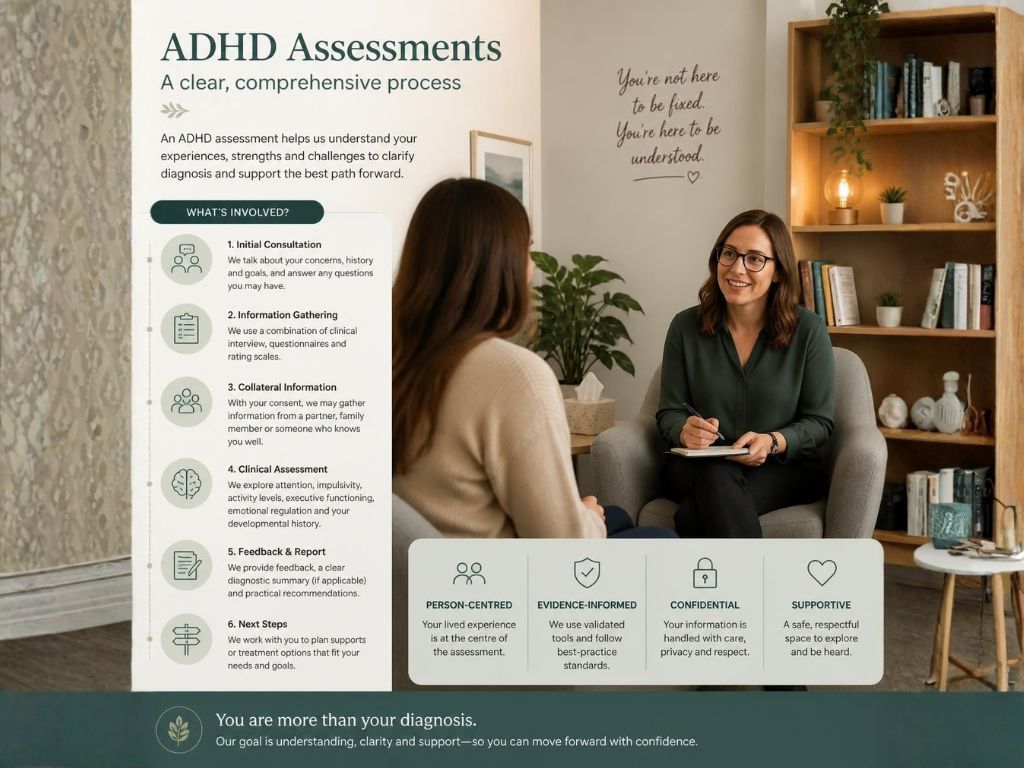
An ADHD assessment is a structured process used by qualified health professionals to better understand a person’s experiences with attention, focus, organisation, impulsivity, and activity levels. The assessment typically involves gathering information about current symptoms, developmental history, daily functioning, and any factors that may be contributing to similar difficulties. The process can vary between individuals and services, but it is designed to provide a comprehensive understanding rather than relying on a single test or questionnaire.
Who This Information Is For
This information may be helpful for adults, parents, carers, educators, or anyone considering whether an ADHD assessment could be appropriate for their situation.
Some people seek an assessment because they have experienced lifelong difficulties with attention, organisation, or impulsivity. Others may be exploring why certain challenges have become more noticeable at work, study, home, or in relationships.
What Is ADHD?
Attention-Deficit/Hyperactivity Disorder (ADHD) is a neurodevelopmental condition that affects the way a person regulates attention, behaviour, and activity levels.
ADHD can present differently from person to person. While some individuals primarily experience difficulties with attention and organisation, others may experience greater challenges with impulsivity, hyperactivity, or a combination of these traits.
It is important to remember that many ADHD-related characteristics can also occur in people who do not have ADHD. This is one reason why a comprehensive assessment process is important.
Considering this topic further?
Some people who relate to these experiences may consider exploring psychological support depending on their situation.
Learn more about psychology services in Brisbane and telehealth options
Why Might Someone Seek an ADHD Assessment?
People may seek an ADHD assessment for various reasons.
These can include:
- Difficulty maintaining attention during tasks or conversations
- Frequent forgetfulness or disorganisation
- Challenges with time management
- Impulsive decision-making
- Restlessness or difficulty sitting still
- Ongoing struggles at work, study, or in daily responsibilities
- A family history of ADHD
- Recommendations from a healthcare professional, educator, or family member
Experiencing one or more of these challenges does not necessarily mean someone has ADHD. Similar symptoms can occur for many reasons, which is why an assessment looks at the broader picture.
What Is Involved in an ADHD Assessment?
ADHD assessments are typically completed through a series of appointments rather than a single consultation.
The specific process may vary but commonly includes several key components.
Clinical Interview
A clinician will usually conduct a detailed interview to understand the person’s experiences and concerns.
Topics may include:
- Current symptoms and challenges
- Education and employment history
- Developmental history
- Medical and mental health history
- Family background
- Day-to-day functioning
Standardised Questionnaires
Questionnaires may be used to gather additional information about attention, behaviour, and executive functioning.
In some cases, questionnaires may also be completed by partners, parents, carers, or other people who know the individual well.
Developmental History
Because ADHD begins in childhood, clinicians often explore early life experiences and developmental patterns.
This may involve discussing:
- School experiences
- Childhood behaviour
- Learning difficulties
- Social development
- Previous reports or records where available
Assessment of Other Factors
Many conditions can affect attention, concentration, memory, and behaviour.
An assessment may therefore consider factors such as:
- Anxiety
- Depression
- Sleep difficulties
- Stress and burnout
- Learning differences
- Medical conditions
- Substance use
This helps ensure that symptoms are understood within the broader context of a person’s health and circumstances.
Is There a Single Test for ADHD?
No.
There is currently no single blood test, brain scan, or questionnaire that can determine whether someone has ADHD.
Assessment involves combining information from multiple sources to develop a comprehensive understanding of a person’s experiences and functioning.
Practical Checklist
Before Your First Appointment
- Gather any previous psychological, educational, or medical reports if available
- Consider examples of challenges experienced at work, study, or home
- Make a note of any questions you would like to ask
- Check any assessment forms that need to be completed beforehand
How to Prepare
- Reflect on both current and childhood experiences
- Consider speaking with family members if information about childhood development is needed
- Allow time to complete questionnaires thoroughly
- Bring relevant documents if requested
Questions You May Want to Ask
- What does the assessment process involve?
- How many appointments are usually required?
- Who will be involved in the assessment?
- How is information collected and reviewed?
- What happens after the assessment is completed?
How Long Does an ADHD Assessment Take?
The length of an assessment varies depending on the individual’s circumstances and the assessment model being used.
Some assessments occur across multiple sessions to allow sufficient time to gather information, review history, and consider different factors that may influence attention and behaviour.
What Happens After the Assessment?
Following the assessment, the clinician will generally discuss their findings and explain the next steps.
Depending on the service and the individual’s circumstances, this may involve:
- Providing feedback about the assessment findings
- Discussing strengths and challenges identified during the process
- Explaining relevant recommendations
- Providing information that may assist ongoing care and support planning
Recommendations vary according to individual needs and circumstances.
Exploring support options
For some people, understanding these experiences may lead to exploring different support options.
Takes Care Specialist Centre provides psychology services in Brisbane and telehealth options across Australia. Support approaches vary depending on individual circumstances.
Common Misconceptions
Myth: ADHD only affects children.
Fact: ADHD is a neurodevelopmental condition that can continue into adulthood, although experiences may change over time.
Myth: ADHD is simply a lack of motivation.
Fact: ADHD relates to differences in attention regulation and executive functioning rather than motivation alone.
Myth: Everyone who is forgetful or distracted has ADHD.
Fact: Occasional attention difficulties are common. ADHD assessments consider patterns, duration, severity, and impact on daily functioning.
Myth: An online quiz can diagnose ADHD.
Fact: Online screening tools may provide general information but cannot replace a comprehensive assessment conducted by appropriately qualified health professionals.
Next Steps
Some people choose to explore professional support if concerns about attention, organisation, impulsivity, or executive functioning feel relevant to their situation.
At Takes Care Specialist Centre, support options may include:
- ADHD assessments for adults and young people where appropriate
- Telehealth psychology services in Brisbane and across Australia
- Learning more about the psychologists and clinicians at the Centre
- Requesting an appointment or managing an existing booking
Support approaches vary and are tailored to individual needs.
Frequently Asked Questions
Do I need a referral for an ADHD assessment?
Referral requirements vary depending on the service and clinician involved. It can be helpful to check directly with the provider.
Can adults be assessed for ADHD?
Yes. ADHD assessments can be conducted for adults as well as children and adolescents, depending on the services offered.
Will I receive a diagnosis after the first appointment?
Assessment processes vary. A diagnosis, where appropriate, is generally based on information gathered throughout the assessment rather than a single appointment.
Are questionnaires enough to diagnose ADHD?
No. Questionnaires are often one part of the assessment process and are typically considered alongside clinical interviews, developmental history, and other relevant information.
Can other conditions look similar to ADHD?
Yes. Various mental health, medical, developmental, and lifestyle factors may influence attention, concentration, and behaviour. A comprehensive assessment considers these possibilities as part of the overall evaluation.