
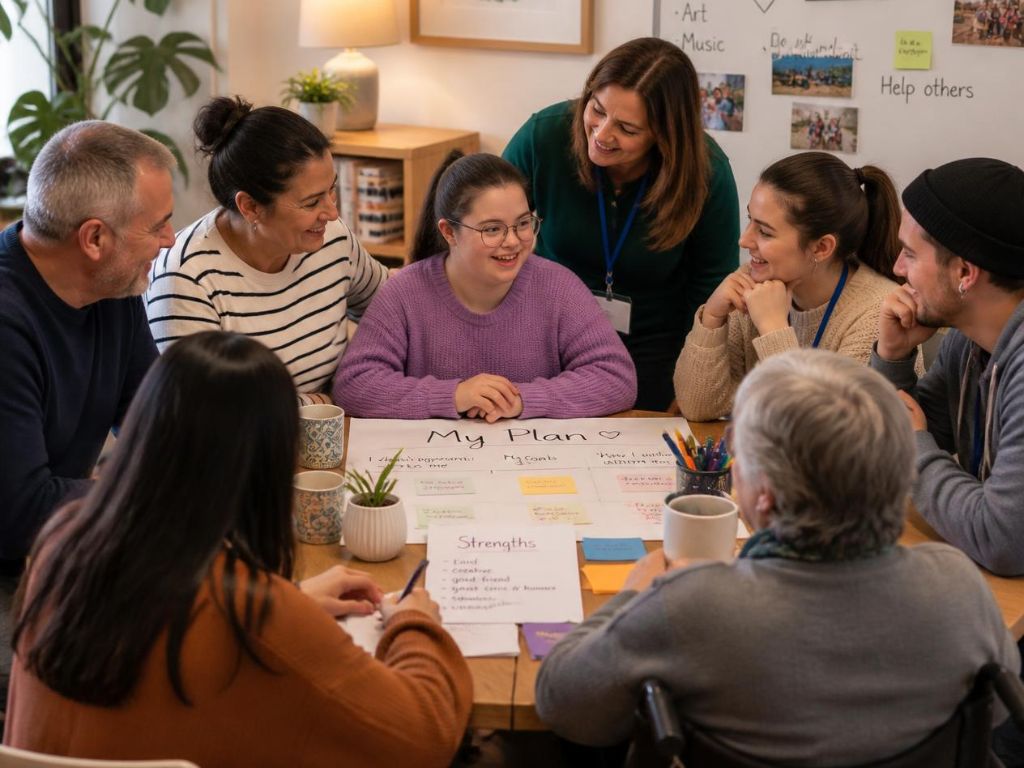
Behaviour Support Plans (BSPs) are an important component of the National Disability Insurance Scheme (NDIS). They help people with disability receive tailored support that improves their quality of life, promotes independence, and reduces behaviours of concern through positive and proactive strategies. Positive Behaviour Support (PBS) focuses on understanding the reasons behind behaviour and identifying ways to better support the individual, rather than simply trying to stop the behaviour.
This article explores what Positive Behaviour Support is, why it is person-centred, the different types of Behaviour Support Plans, the key elements contained within a plan, best-practice guidance for practitioners, and suitable images for supporting educational content.
What is Positive Behaviour Support?
Positive Behaviour Support (PBS) is an evidence-based approach that seeks to understand why behaviours of concern occur and develops strategies to improve a person’s quality of life. PBS recognises that behaviour is a form of communication and often reflects unmet needs, environmental factors, communication difficulties, sensory challenges, or emotional distress.
The primary goals of Positive Behaviour Support are to:
- Improve the person’s quality of life.
- Increase independence and participation.
- Teach alternative skills and coping strategies.
- Enhance communication.
- Reduce behaviours of concern.
- Minimise and eventually eliminate restrictive practices wherever possible.
Rather than focusing on punishment or control, PBS focuses on understanding the person and creating environments where they can succeed.
Considering this topic further?
Some people who relate to these experiences may consider exploring psychological support depending on their situation.
Learn more about psychology services in Brisbane and telehealth options
Why NDIS Positive Behaviour Support is Person-Centred
Person-centred practice is a fundamental principle of the NDIS approach to behaviour support. Every participant has unique goals, strengths, preferences, experiences, and support needs. As a result, support strategies must be tailored to the individual rather than adopting a standardised approach.
A person-centred approach involves:
Respecting Individual Choice and Control
Participants are encouraged to actively participate in decisions about their support, ensuring their voice is heard throughout the planning process.
Focusing on Strengths
PBS identifies and builds upon a person’s interests, abilities, and existing skills instead of focusing only on challenges or behaviours of concern.
Supporting Quality of Life
The ultimate goal is to improve wellbeing, social participation, relationships, independence, and community inclusion—not just to reduce difficult behaviours.
Collaboration with Support Networks
Effective Behaviour Support Plans are developed in partnership with families, carers, support workers, therapists, and other key stakeholders who know the participant well.
Types of Behaviour Support Plans
Within the NDIS framework, Behaviour Support Plans are generally developed as either:
1. Interim Behaviour Support Plan
An Interim Behaviour Support Plan provides immediate guidance where there are urgent concerns about safety or behaviours of concern. It acts as a temporary plan while a more detailed assessment is undertaken.
2. Comprehensive Behaviour Support Plan
A Comprehensive Behaviour Support Plan is developed following a detailed assessment and functional behaviour analysis. It includes long-term strategies that address the causes of behaviour, improve quality of life, build skills, and support behaviour change over time.
Where restrictive practices are used, both plan types must include strategies aimed at reducing and eliminating those practices wherever possible.
Brief Overview of the Areas Included in a Behaviour Support Plan
While every plan is individualised, most Behaviour Support Plans contain several core sections.
Participant Profile
Provides an overview of the participant, including their strengths, interests, preferences, goals, communication style, cultural background, and support needs.
Background Information
Summarises relevant personal, medical, social, educational, and support history that may influence behaviour and support requirements.
Assessment Findings
Documents information gathered through observation, interviews, data collection, and formal assessments to understand the participant’s needs.
Functional Behaviour Assessment
Explains the likely reasons or functions behind behaviours of concern, including triggers and contributing factors.
Description of Behaviours of Concern
Clearly outlines the behaviours being addressed and describes how, when, and where they occur.
Proactive Strategies
Identifies preventative approaches designed to reduce the likelihood of behaviours occurring, such as environmental adjustments, communication supports, routines, and sensory accommodations.
Skill Development Strategies
Outlines skills that the participant can develop to better express needs, manage emotions, communicate effectively, and participate more independently.
Response Strategies
Provides guidance for support staff and carers on how to respond safely, consistently, and positively when behaviours of concern occur.
Restrictive Practice Information
Where relevant, outlines any authorised restrictive practices, monitoring requirements, and strategies for reducing or eliminating their use.
Monitoring and Review
Explains how progress will be measured, what data will be collected, and how frequently the plan will be reviewed to ensure it remains effective.
Best Practice Guidelines for Behaviour Support Practitioners
The NDIS Quality and Safeguards Commission’s Positive Behaviour Support Capability Framework outlines the standards and capabilities expected of behaviour support practitioners.
Best-practice behaviour support practitioners should:
Prioritise Human Rights
Ensure all supports uphold dignity, respect, choice, autonomy, and inclusion for people with disability.
Conduct Comprehensive Assessments
Use evidence-based assessment processes to fully understand the participant, their environment, and the function of behaviours.
Focus on Quality of Life
Measure success through improved wellbeing, independence, participation, and relationships rather than simply reducing behaviours.
Collaborate with Stakeholders
Work closely with participants, families, carers, support workers, and allied health professionals throughout assessment, planning, and implementation.
Build Capacity
Provide guidance, coaching, and education that enables support teams to confidently implement behaviour support strategies.
Reduce Restrictive Practices
Actively develop strategies that reduce reliance on restrictive interventions and promote positive alternatives.
Exploring support options
For some people, understanding these experiences may lead to exploring different support options.
Takes Care Specialist Centre provides psychology services in Brisbane and telehealth options across Australia. Support approaches vary depending on individual circumstances.
Conclusion
Behaviour Support Plans are an essential tool within the NDIS, providing structured, person-centred strategies that help participants achieve meaningful outcomes. By focusing on understanding behaviour, building skills, improving environments, and enhancing quality of life, Positive Behaviour Support enables individuals to participate more fully in their communities while promoting dignity, independence, and choice. When implemented according to best-practice principles, Behaviour Support Plans can deliver positive and lasting benefits for participants, families, and support teams alike.